PRIVATE JETS AT THE MASTERS — INSIDE THE BUSIEST PRIVATE AVIATION WEEK OF THE YEAR | JET AGENCY
Written By Jordan Brown | 03.31.26
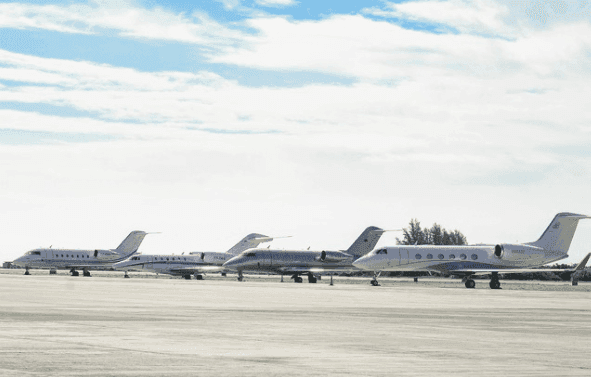
On a single Tuesday practice day at The Masters — before a single competitive shot had been hit — 225 private jets arrived and departed Augusta Regional Airport. By the end of the week that number had grown to over 1,500 total movements. One entire runway was taken offline. Not for flights. For parking.
Every April, The Masters transforms Augusta Regional Airport from a small regional facility serving two airlines and four cities into one of the most concentrated private aviation events in the country. Here is what that actually looks like from the inside.
The Numbers Behind Masters Week
Augusta Regional processes around 5,000 passengers on a normal week. During The Masters that figure jumps to over 30,000. Private jet arrivals account for more than 1,500 movements across the tournament — with the ramp filling so quickly that overflow aircraft are directed to nearby Aiken Regional Airport in South Carolina and Daniel Field, the smaller airport closest to Augusta National itself.
1,500+ private jet arrivals during Masters week
5x normal airport capacity during the tournament
225 private jets on a single Tuesday practice day alone
500,000+ gallons of fuel trucked in for the week
100+ additional ground crew and handlers brought in just to manage the operation
The World Flies In
Most flights are domestic. New York leads as the top origin city, followed by Palm Beach, Dallas and Dulles. The flight from Palm Beach to Augusta takes under two hours — for the audience that attends The Masters, that barely registers as a trip.
But the international arrivals tell their own story. Flights arrive from Canada, the Caribbean and Europe every year. In 2025 one jet made the 14-hour journey direct from South Korea. Landing slots at Augusta during tournament week have been described by those inside the industry as harder to secure than the tickets themselves.
The Special Event Fees — What Catches People Off Guard
Flying into Augusta for The Masters is not like any other trip. The Augusta Aviation Commission operates a special event fee schedule for the duration of the tournament — approved fees applied on top of standard landing charges.
Here is what that looks like by aircraft category:
- Small aircraft (up to 4,000 lbs): $150 special event fee
- Small aircraft (4,001 to 8,000 lbs): $400 special event fee
- Small aircraft (8,001 to 12,500 lbs): $750 special event fee
- Medium aircraft (12,501 to 25,000 lbs): $2,500 special event fee
- Large aircraft (25,001 to 50,000 lbs): $3,200 special event fee — plus $4.01 per 1,000 lbs landing fee
- Heavy aircraft (50,001 to 100,000 lbs): $4,000 special event fee — plus $4.01 per 1,000 lbs landing fee
These are per-arrival fees. For anyone leaving their aircraft on the ramp for multiple days — which most Masters attendees do — daily ramp fees stack on top. For a large or heavy cabin aircraft staying through the full tournament, ground fees alone can run into five figures before fuel is even considered.
It is the part of Masters week travel that catches first-time attendees off guard. Understanding the full cost picture — not just the flight but the handling, ramp charges and special event surcharges — is part of planning the trip properly. For Jet Agency members, navigating exactly these details is part of what the programme is built around.
What It Takes to Keep It All Running
The logistics behind Masters week aviation are extraordinary. Over 500,000 gallons of fuel are trucked into Augusta Regional for the week alone. More than 100 additional ground crew, fuellers and handlers are brought in to manage the operation — the airport simply could not run Masters week on its permanent team alone.
One of the less visible parts of the operation is the movement of line technicians from FBOs across the country specifically to Augusta for the week. The ground crew who handle aircraft on arrival, manage fuel, assist with parking and coordinate departures are brought in from other airports nationwide. Augusta simply does not have the permanent staffing to manage 1,500 private jet movements with its regular team. It is a coordinated national effort that most passengers never see.
The airport's own team has described it as organised chaos. From the inside, it is an impressive logistical operation that assembles for one week every April and then quietly stands down until the following year.
The Overflow Airports
When Augusta Regional reaches capacity — and it does, every year — aircraft divert to nearby alternatives. Aiken Regional Airport in South Carolina, roughly 25 minutes from Augusta National, absorbed 624 flights during Masters week in 2022 alone. Daniel Field, the closest airport to the course with a runway just over 4,000 feet, handles lighter aircraft including turboprops and smaller jets.
For anyone flying in on a larger cabin aircraft, knowing which airport your aircraft can actually operate into — and having a contingency plan for overflow — is part of making the week work. Arriving without that knowledge is how you end up significantly further from Augusta National than you expected.
Planning Ahead — For This Year and Next
If you are heading to Augusta this week, The Masters starts April 6th. The Jet Agency team will be at the FBO throughout the tournament. Come and find us.
For anyone thinking about The Masters next year or other major events on the calendar — the earlier you plan private aviation around high-demand events like this, the better. Landing slots fill quickly, FBO space is limited and the cost picture looks very different when you are booking ahead versus scrambling at the last minute. A Jet Agency membership puts you in the position to plan these trips the right way — with rate certainty, priority access and a team that knows how these events work from the inside.

CURIOUS ABOUT JET AGENCY?
Please let us know a little bit about you, and one of our experienced membership directors will be in touch shortly to help personalize a membership for you.